GPS Bike Computer vs Smartphone: Why Use a Bike Computer Instead of a Cell Phone?
Many cyclists already carry a smartphone. It tracks rides, shows maps, and connects to fitness apps. That raises a simple question: why buy a GPS bike computer?
The answer depends on how and where you ride. A smartphone can work well for casual trips. A GPS bike computer offers features that make riding easier, safer, and more reliable, especially on longer rides.
Let’s compare both options so you can decide which one fits your riding style.
What Is a GPS Bike Computer?
A GPS bike computer is a device made for cycling. It records your route, speed, distance, elevation, and ride time using GPS. Many models also connect to sensors that measure heart rate, cadence, speed, and power.
Why Many Cyclists Choose a GPS Bike Computer
Exploring the benefits of using a GPS bike computer can help you decide if it’s the right fit.
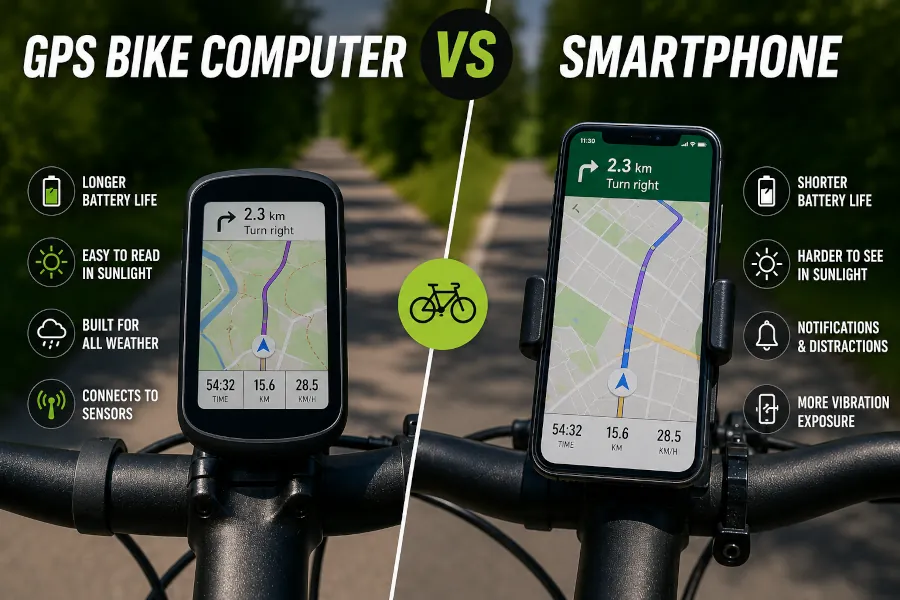
Longer Battery Life
Battery life is one of the biggest advantages.
A smartphone usually lasts several hours with the screen on and GPS running. A GPS bike computer often lasts much longer on a single charge. Many models can record full-day rides without running out of power.
That means your phone stays charged for calls, messages, or emergencies.
Better Visibility in Bright Sunlight
Sunlight can make phone screens difficult to read. Many GPS bike computers use displays that stay clear in bright daylight.
You spend less time squinting at the screen and more time watching the road. Your eyes will thank you.
Built for Weather
Rain happens. Dust happens. Mud definitely happens.
Most GPS bike computers are built with outdoor riding in mind. They usually have water-resistant designs and buttons or touchscreens that work in different weather conditions.
Many smartphones offer water resistance, but repeated exposure to rain, sweat, dust, and vibration can still increase wear over time.
Strong Handlebar Mounts
Bike computers use mounts made for cycling. They stay secure over bumps, gravel, and fast descents.
A smartphone mount can work well, but some mounts shake more, and large phones may be harder to secure during rough rides.
Better Navigation for Cyclists
Many GPS bike computers include turn-by-turn directions and cycling-friendly routes.
Some devices can recalculate your route if you take a wrong turn. Others allow you to load planned routes before your ride.
The result is simple navigation without constantly reaching for your phone.
Connects to Cycling Sensors
A GPS bike computer can connect to several training devices, including:
- Heart rate monitors
- Cadence sensors
- Speed sensors
- Power meters
These connections give you detailed ride data that many serious cyclists use to improve fitness and track progress.
Automatic Ride Recording
Most bike computers start recording quickly after finding a GPS signal. Many also upload rides automatically to popular fitness platforms once you finish.
You spend less time setting up and more time riding.
When a Smartphone Is Enough
A smartphone still works well for some cyclists.
It may be the right choice if you:
- Ride short distances
- Cycle only occasionally
- Already use a cycling app
- Want to avoid buying another device
- Prefer one device for music, photos, and navigation
For casual rides around town, a phone often provides everything you need.
The Downsides of Using a Smartphone
Phones have a few limits during longer rides.
GPS navigation and a bright screen on a phone use a lot of battery power. Incoming calls and notifications can interrupt navigation. Phones are also larger and heavier than most bike computers.
Vibrations from mounting your cell phone onto your handlebars could damage your phone over time. Rain and dusty weather could also be hard on your phone.
In extreme hot or cold weather, some phones may reduce performance if they become too hot or cold.
Which Option Is Right for You?
The best choice depends on your riding goals.
Choose a smartphone if you ride occasionally, stick to familiar routes, want a simple solution, and don’t mind not being able to see the screen at times.
Choose a GPS bike computer if you ride often, train regularly, enjoy long-distance cycling, or want reliable navigation and detailed ride data.
Many experienced cyclists actually use both. The bike computer handles navigation and ride tracking, while the smartphone stays safely in a pocket for communication and emergencies.
Still not sure? Click here to see some additional points you might want to consider.
Frequently Asked Questions
Is a GPS bike computer better than a smartphone?
A GPS bike computer is better overall for longer rides and serious riders because it offers longer battery life, a screen that is easier to read in bright sunlight, secure handlebar mounting, and support for cycling sensors. A smartphone can still be a good choice for casual rides and short trips.
Can I use my phone instead of a bike computer?
Yes. A smartphone can record rides, provide GPS navigation, and connect to cycling apps. It works well for some cyclists, especially on shorter rides. However, frequent GPS use and a bright screen can drain the battery quickly, it can be hard to see in bright sunshine, and it isn’t weather-proof or vibration-proof if mounting on handlebars.
Why do cyclists use GPS bike computers?
Cyclists use bike computers because they provide reliable navigation, accurate ride tracking, longer battery life than phones, and support for accessories such as heart rate monitors, cadence sensors, speed sensors, and power meters. They are built to withstand harsh weather and the screens are easier to see in the outdoors.
Does a GPS bike computer work without a phone?
Yes. A GPS bike computer can record rides and provide navigation without a smartphone. Some features, such as live tracking, ride uploads, or notifications, may require a phone connection depending on the device.
Are GPS bike computers more accurate than smartphones?
Both devices use GPS and can provide accurate ride tracking. A bike computer may deliver more consistent cycling data because it is built for outdoor riding and can connect to dedicated speed and cadence sensors.
Do I need a GPS bike computer for casual cycling?
No. Casual cyclists can often use a smartphone with a cycling app. A GPS bike computer becomes more useful for longer rides, regular training, or cyclists who want detailed ride data and reliable navigation.
Can a GPS bike computer give turn-by-turn directions?
Many GPS bike computers offer turn-by-turn navigation. Some models also allow riders to load planned routes and automatically recalculate directions if they leave the route.
Does a bike computer save my phone battery?
Yes. Using a GPS bike computer for navigation and ride recording reduces GPS and screen use on your smartphone. This helps preserve your phone’s battery for calls, messages, and emergencies.
Can a GPS bike computer connect to fitness sensors?
Yes. Many GPS bike computers connect wirelessly to heart rate monitors, cadence sensors, speed sensors, and power meters. This provides detailed performance data during each ride.
Should I carry my smartphone if I have a GPS bike computer?
Yes. Many cyclists carry both devices. The bike computer handles navigation and ride tracking, while the smartphone is available for communication, weather updates, photos, and emergencies.
Additional Considerations
- Crash Detection and Live Tracking
Some GPS bike computers include crash detection or incident detection features that can notify emergency contacts if they detect a serious fall. Many also support live tracking so friends or family can follow your ride. These features often require a paired smartphone and cellular coverage.
- Better Focus While Riding
A bike computer is dedicated to cycling. It does not interrupt your ride with texts, emails, or social media notifications (unless you choose to enable them). This can help reduce distractions and keep your attention on the road.
- Better Glove Compatibility
Many bike computers use physical buttons or touchscreens that are easier to operate while wearing cycling gloves. This can be helpful in cold or wet conditions.
- Easier Access to Ride Data
Bike computers are designed to display cycling metrics clearly. You can customize data screens to show only the information you want, such as:
- Current speed
- Average speed
- Distance
- Heart rate
- Cadence
- Power
- Climbing data
This allows you to check your stats with a quick glance.
- Better Integration with Cycling Ecosystems
Many bike computers sync automatically with popular cycling platforms such as Strava, TrainingPeaks, Komoot, and Ride with GPS. This makes it easy to analyze rides or follow planned routes.
- Off-Road Riding
Mountain bikers and gravel riders often prefer a bike computer because it stays secure on rough terrain and is easier to read while riding over uneven surfaces.
- Cost
A bike computer is an additional expense. If you already own a smartphone and only ride occasionally, a cycling app may provide good value.
- Screen Size Trade-Off
A smartphone usually has a larger display, which can make maps easier to view. A bike computer has a smaller screen, but it is optimized to show the information cyclists need without clutter.
- Protecting an Expensive Smartphone
Many riders prefer to keep their phone safely in a jersey pocket or bag. Leaving it off the handlebars reduces its exposure to rain, vibration, dirt, and the risk of damage if the bike falls over.
- Bike Computers Are More Than GPS Devices
Many people assume a bike computer is just for navigation. Modern models are also training tools that provide workout guidance, climbing information, performance tracking, and integration with indoor trainers.
Final Thoughts
A smartphone can be a useful cycling tool for occasional riders who do not want to purchase an additional device.
A GPS bike computer offers longer battery life, better outdoor visibility, secure mounting, and features built specifically for cycling. Those benefits become more valuable as rides get longer, more demanding, you want to see metrics at a glance, or you want to save your phone from damage.
The good news is that there is no wrong choice. Pick the option that matches your riding style, then get out and enjoy the ride. After all, the best cycling gadget is the one that helps you spend more time pedaling and less time wondering if your battery will survive the trip.

by: Cory Willins
Cory is a dynamic and passionate content writer, specializing in sports-related topics. With over a decade of experience in the field, Cory has established… read more