Wireless vs Wired Bicycle Computers: Which Should You Choose?
If you want to track your speed, distance, ride time, and more, a bicycle computer is one of the most useful upgrades you can add to your bike. The big question is whether you should choose a wired or wireless model.
The decision between wired and the three different types of wireless depends on your bike, riding style, budget, and needs.
In a Nutshell
Choose a wired bike computer (approx $20 – $40 USD) if:
- You want the most budget-friendly option without paying extra for wireless technology.
- You prefer a simple, reliable connection that is not affected by wireless interference or pairing issues.
- You mainly ride one bike and don’t mind a more permanent installation.
- You want fewer batteries to replace since the wired sensor is powered through the cable rather than its own battery.
Choose a wireless sensor-based bike computer (approx $40 – $80 USD) if:
- You want a clean, clutter-free look with no sensor wires running along your bike frame.
- You want faster, easier installation without routing and securing cables.
- You plan to switch the computer between multiple bikes and want a setup that’s quick to move.
- You prefer a modern system that pairs easily with compatible wireless speed, cadence, and heart rate sensors.
Choose a basic wireless GPS bike computer (approx $40 – $100 USD) if:
- You want all of the above wireless sensor-based features but with even easier installation (no wheel sensor needed since the GPS gathers the data)
- You also want to track elevation and record your ride to upload to apps like Strava
Choose a full wireless GPS bike computer (approx $200 – $700 USD) if:
- You want to track your rides, routes, speed, distance, and elevation without using a wheel speed sensor.
- You enjoy exploring new roads or trails and want turn-by-turn navigation or route guidance.
- You like reviewing ride data and syncing your workouts with fitness apps after each ride.
- You train regularly and want advanced features such as performance metrics, structured workouts, and detailed ride analysis.
For many riders, the sweet spot is a basic wireless GPS computer or a wireless sensor-based computer: simple and easy to live with. Your handlebars stay tidy and you spend more time riding than installing wires.
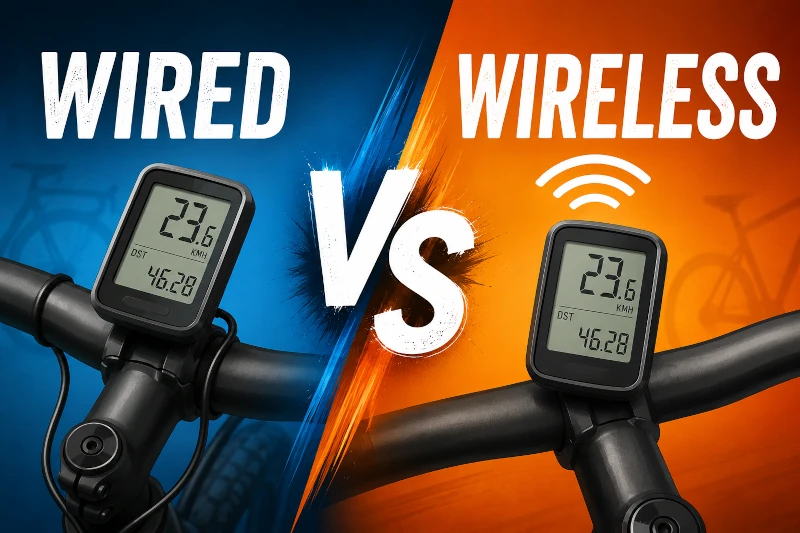
Wired vs Wireless:
Still not sure? Let’s dig further into the details.
How Wired Bike Computers Work
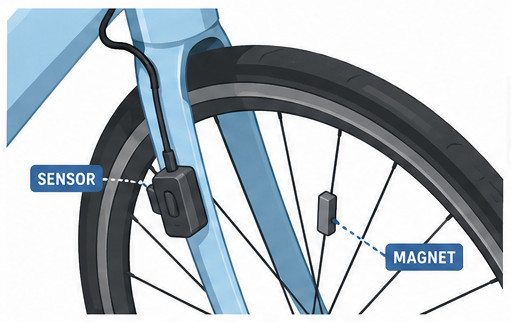
A wired computer uses:
- A sensor mounted on the fork
- A magnet attached to the wheel
- A physical wire that connects the sensor to the display
Every wheel rotation sends a signal through the wire: a stable connection that eliminates the risk of wireless interference or pairing difficulties.
How Wireless Bike Computers Work
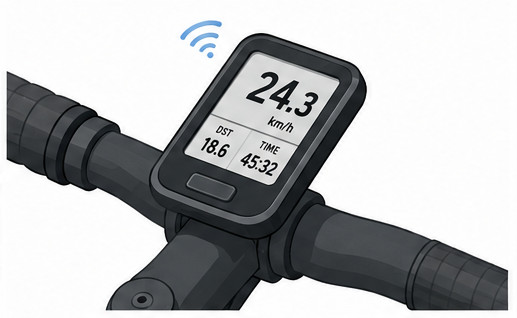
Three Types of Wireless Bike Computers
1. Sensor-Based Wireless Computers
These models use wireless speed and cadence sensors. They work similarly to wired computers but transmit the data wirelessly. A sensor does need to be installed on a wheel, but it’s much easier than dealing with running wires. Two batteries are required: one for the computer at the handlebars, and one for the sensor on the wheel.
2. Basic GPS-Based Wireless Computers
These models use satellites to measure speed, distance, and route information. Very easy to set up. Just slap it on your computer, turn it on, and wait a minute for it to connect to the satellite. And you can get even more functionality from the unit if you connect it with a phone app and other devices. These do not usually have turn-by-turn navigation or map displays.
Interfacing with certain apps and devices can provide:
- Route tracking
- Ride uploads
- Heart rate
- Cadence
3. Full GPS-Based Wireless Computers
The whole meal deal. Full GPS versions are much more feature-rich and can do just about everything you want them to. Connects to devices and apps for functionality including:
- Navigation including turn-by-turn
- Map displays
- Route tracking
- Ride uploads
- Training data
- Heart rate
- Cadence
- and more
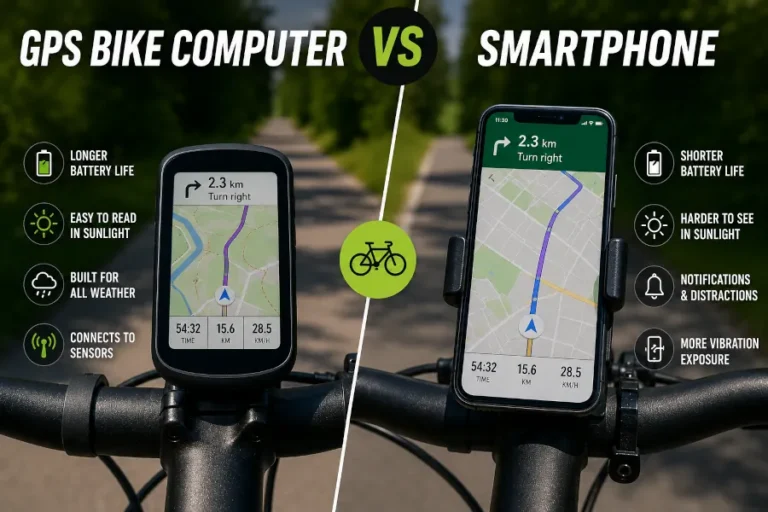
GPS Bike Computers vs Wireless Sensor-Based Bike Computers
Comparison quick chart to help you see the differences between the wireless varieties:
| Feature | Wireless Sensor-based Computer | Basic GPS Bike Computer | Full GPS Bike Computer |
|---|
| Measures Speed & Distance | Wheel sensor | GPS | GPS |
| Uses Wheel Sensor | Yes | Usually No | Usually No (optional on some models) |
| Uses GPS Satellites | No | Yes | Yes |
| Navigation | No | Basic breadcrumb or route following (on some models) | Full turn-by-turn navigation with maps |
| Ride Recording | Basic ride data | Complete ride recording | Complete ride recording |
| Route Tracking | No | Yes | Yes |
| Ride History | Limited | Yes | Yes |
| Smartphone App Sync | Sometimes | Yes | Yes |
| Training Metrics | Limited | Basic | Advanced (power, VO₂ Max estimates, training load, recovery, etc.) |
| Heart Rate/Cadence Support | Optional | Usually | Yes |
| Power Meter Support | Rare | Sometimes | Yes |
| Battery Life | Long (months to years) | Good (15–30 hours typical) | Good to Very Good (15–60+ hours depending on model) |
| Display | Small monochrome | Monochrome or color | Larger color touchscreen or buttons |
| Typical Price | $40–$80 | $40–$100 | $200–$700+ |
| Best For | Casual riders, commuters, beginners | Recreational cyclists, fitness riders | Serious road cyclists, racers, bikepackers, and tourers |
Advantages of Wired Bicycle Computers
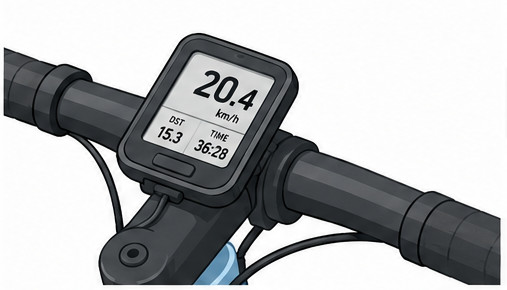
Yes, functionality is limited, but for those who don’t need all the bells and whistles, wired offers some advantages such as:
- Zero-Interference Reliability: A wired connection does not suffer from wireless signal interference. The data transfer is extremely consistent.
- Longer Battery Life: Wired systems use less power because they do not transmit wireless signals.
- Lower Cost: Many wired computers are among the most affordable options available.
Disadvantages of Wired Bicycle Computers
- More Difficult Installation: You must route the wire along the frame.
- Not Ideal for Folding Bikes: Folding and unfolding can stress or damage the wire.
- Snagging Risk: Wires can catch on bike racks, branches, or other objects. Think of them as tiny bike spaghetti with ambitions.
- Less Features: They don’t interface with smartphones or other devices.
Advantages of Wireless Sensor-Based Bicycle Computers
- Easy Installation: No wire routing is required.
- Clean Appearance: The handlebars and frame look less cluttered.
- Easy to Move Between Bikes: Many wireless models transfer quickly from one bike to another.
- Advanced Features in some models: Smartphone syncing and are common on higher-end models.
Disadvantages of Wireless Sensor-Based Bicycle Computers
- Higher Battery Usage: Wireless communication requires more power.
- Higher Cost: Wireless models usually cost more.
- Manual Ride Start on Some Models: Many wireless computers do not start recording automatically until you tell them to start. Forgetting to press the button can lead to a ride that exists only in your memory.
- Possible connectivity issues: Function relies on wireless connections which may not work in certain conditions.
Advantages of Wireless Basic GPS Computers
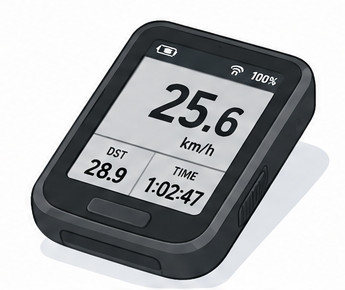
- No wheel sensor required: Speed and distance are measured using GPS, making setup quick and simple.
- Easy ride recording: Most models save your rides and can sync them to apps like Strava for tracking and sharing.
- More accurate over long rides: GPS distance doesn’t require wheel circumference calibration and isn’t affected by tire size changes.
- Affordable entry into GPS cycling: They offer many of the benefits of GPS technology at a much lower price than premium bike computers.
- Can usually synch to compatible heart-rate and cadence monitors.
Disadvantages of Basic Wireless GPS Computers
- Slightly slower to start riding: They need to acquire a GPS signal before speed and distance tracking begins.
- Battery requires charging: Unlike many sensor-based computers with coin-cell batteries, GPS models need to be recharged regularly.
- Accuracy can vary: Tall buildings, dense tree cover, tunnels, and poor satellite reception can affect speed and distance readings.
Advantages of Full Wireless GPS Computers
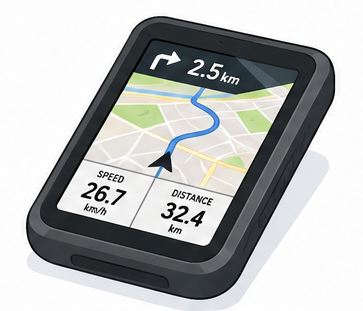
- Ride anywhere with confidence: Built-in GPS tracks your route and provides navigation on many models, making it easy to explore new roads and trails.
- Gain deeper ride insights: View detailed metrics such as speed, distance, elevation, and ride history to monitor your progress.
- Sync effortlessly with your favorite apps: Most models connect to apps like Strava, Komoot, and TrainingPeaks for easy ride uploads and analysis.
- Keep your handlebars clutter-free: Wireless connectivity eliminates sensor cables, giving your bike a cleaner look and making installation easier.
Disadvantages of Wireless GPS Computers
- Higher upfront cost: GPS models are typically the most expensive type of bicycle computer.
- Shorter battery life: GPS tracking and wireless connectivity consume more power, so you’ll need to recharge the device regularly.
- More complex to use: Advanced features, settings, and navigation can take time to learn.
- Occasional connectivity issues: GPS signals, wireless sensors, or smartphone syncing may occasionally disconnect or require troubleshooting. See below for examples.
Are Wireless Bicycle Computers Reliable?
Yes. Modern wireless bike computers are generally very reliable.
Technologies such as ANT+ and Bluetooth have improved signal stability.
Common issues include:
- Low battery levels
- Sensor pairing problems
- Occasional signal interference
For most riders, these issues are rare. However, a wired computer still has a small advantage in absolute reliability.
Quick Side-by-Side Pros and Cons Summary
| Bicycle Computer Type | Pros | Cons |
|---|---|---|
| Wired Bicycle Computer | • Most affordable option • Reliable connection with no wireless interference • No sensor battery to replace • Accurate speed and distance measurements | • Visible wires can clutter the bike • Installation takes longer • Harder to move between bikes • Wires can be damaged if snagged |
| Wireless Sensor-Based Bicycle Computer | • Clean, cable-free appearance • Easier and quicker to install • Simple to transfer between bikes • Compatible with wireless speed, cadence, and heart rate sensors on many models | • Costs more than wired models • Sensor battery requires periodic replacement • Some models can experience signal interference • Basic models may not sync with smartphone apps |
| Wireless Basic GPS Bicycle Computer | • No wheel sensor required • Quick and simple to install • Records rides using GPS • Often syncs with smartphone apps and other devices such as cadence sensors and heartrate sensors | • Requires regular recharging • Needs a bit of time to acquire a GPS signal • GPS accuracy can be affected by dense tree cover, tunnels, and tall buildings |
| Wireless Full GPS Bicycle Computer | • Tracks speed, distance, routes, and elevation using GPS • Navigation and route guidance on many models • Syncs with smartphone apps and fitness platforms • Advanced training metrics and ride analysis | • Most expensive option • Requires regular recharging • Shorter battery life due to GPS use • GPS signal can be affected by tunnels, dense tree cover, and tall buildings • Many advanced features have a steeper learning curve |
Which Type Is Best for Beginners?

For most beginners, a basic GPS unit or a sensor-based wireless bicycle computer is the best starting point.
They offer:
- Easy setup
- Clean installation
- Reasonable cost
A wired computer is still a great choice for beginners if you want the lowest price and maximum reliability.

by: Cory Willins
Cory is a dynamic and passionate content writer, specializing in sports-related topics. With over a decade of experience in the field, Cory has established… read more