Hard vs. Soft Ski Bags: Which is Better for Downhill Skis?
When you’re prepping for your next ski trip, how you transport your skis can make or break the experience. Hard and soft ski bags each come with benefits and trade-offs — the decision depends on how often you travel, what type of gear you use, and how much protection you need. In this article, we break down the differences between hard vs. soft ski bags, so you can confidently choose the best ski bag type for your downhill skis.
1. What’s the Difference Between Hard and Soft Ski Bags?
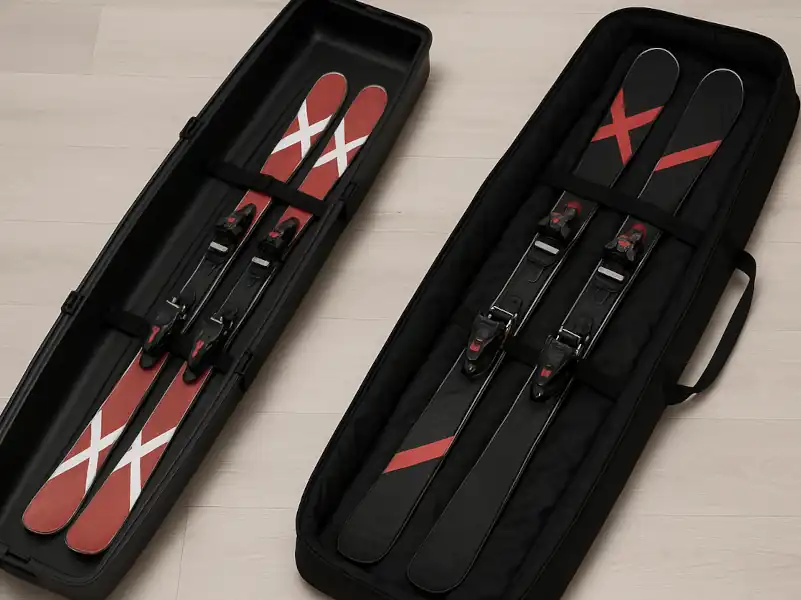
Hard Ski Bags
- Built with rigid materials like ABS plastic or high-density polyethylene
- Offer superior crush and impact protection
- Often come in telescopic models to fit various ski lengths
- Heavier and bulkier, but extremely durable
Soft Ski Bags
- Constructed with padded polyester or nylon fabric
- More flexible and lightweight
- Easier to carry and pack with additional gear
- Foldable for compact storage when not in use
2. Hard vs. Soft Ski Bags: Key Pros & Cons
| Feature | Hard Case | Soft Bag |
|---|---|---|
| Protection | High impact and crush resistance | Good with adequate padding |
| Weight | Heavier | Lighter |
| Storage | Not collapsible | Collapsible |
| Gear Capacity | Limited to skis/poles | More space for boots/clothing |
| Ease of Travel | Durable wheels, rigid support | Flexible, easier to pack |
| Cost | Higher upfront cost | More budget-friendly |
3. Expert Advice & Real-World Insights
Expert Reviews
According to Treeline Review, hard ski cases like Sportube offer unbeatable protection for expensive gear, especially when flying. Conversely, soft ski bags like Dakine’s Boundary Roller balance flexibility with structured padding — a hybrid option ideal for most recreational skiers.
Online Community Opinions
- SkiTalk members recommend hard shells for frequent flyers worried about airline damage.
- Reddit’s r/skiing users suggest soft bags with reinforced zippers and padded interiors for most road trips and domestic travel.
- SnowHeads discussions lean toward hybrid soft cases with added structural support for best-of-both-worlds functionality.
4. Which Type is Right for You?
Ask yourself:
Do you fly often with your skis?
Choose hard cases for peace of mind during baggage handling.
Do you pack more than just skis?
Opt for soft bags with compartments and internal straps.
Do you have limited storage?
Soft ski bags collapse and tuck away easily.
Do you need top-tier protection?
Hard ski bags will safeguard high-end or race skis.
5. Buyer’s Checklist: What to Look for
No matter your choice, always check for:
- Padding at stress points
- Heavy-duty wheels & handles
- Length adjustability
- Compression straps
- Lock compatibility
- Durable waterproof materials
6. Final Verdict: Hard or Soft?
There’s no universal answer, but:
- Choose a Hard Ski Bag if:
You travel by air frequently, own expensive skis, or want the highest level of impact protection. - Choose a Soft Ski Bag if:
You drive to resorts, want lighter luggage, and need space for boots, helmets, and outerwear.
7. Top Recommended Ski Bags
Here are a few expert-approved ski bags to explore:
- Sportube Series 1 Hard Case – Rigid, lockable, airline-ready
- Thule RoundTrip Roller Bag – Soft, structured, excellent padding
- Dakine Boundary Ski Bag – Padded, durable, with extra room for gear
- Athletico Padded Two-Pair Ski Bag Combo – Budget-friendly soft bag with backpack-style boot bag
FAQs
Is a hard ski bag better than a soft one for flying?
Yes, hard ski bags offer better protection during air travel, especially under rough handling.
Can I fit more than just skis in a soft ski bag?
Absolutely. Soft bags often have room for poles, boots, clothing, and accessories.
Do ski bags count as oversized luggage?
Check with your airline, but many allow ski bags within standard sporting goods rules.

by: Ray Pember
Ray is an experienced wordsmith who has dived deep into various niches. With over two decades under his belt, he knows a thing or two about staying afloat in this ever-evolving digital world… read more