When to Replace Your Ski Helmet: Crucial Signs You Shouldn’t Ignore
Why Knowing When to Replace Your Ski Helmet Matters
Your ski helmet is your most important piece of protective gear on the mountain. It shields your head from impact, prevents severe injury, and boosts your confidence every time you carve through fresh powder. Yet, many skiers don’t realize that helmets have a limited lifespan — and continuing to use one past its prime can put you at serious risk.
So, when should you replace your ski helmet? The answer depends on factors like age, usage, condition, and exposure to environmental elements. In this article, we’ll cover the telltale signs that it’s time for a new helmet, what experts recommend, and how to keep your gear performing its best.
Understanding the Lifespan of a Ski Helmet
The Typical Lifespan: How Long Do Ski Helmets Last?
Helmet makers such as Smith and Giro generally suggest a replacement after about three to five years of use, regardless of whether it’s been in a crash. Over time, materials like EPS foam and the outer shell degrade — especially when exposed to sunlight, sweat, and temperature fluctuations.
The helmet might look fine on the outside but may no longer offer the same level of protection it once did. Regular inspections can help identify subtle wear, but it’s smart to keep track of the purchase date.
What Manufacturers Say About Helmet Expiry Dates
Some leading helmet manufacturers advise replacing a helmet roughly five years from its production date. This recommendation isn’t just about marketing — it’s about material fatigue and evolving safety standards. Helmets made a decade ago may lack the latest impact absorption technologies like MIPS (Multi-directional Impact Protection System), which reduces rotational motion transmitted to the brain during angled impacts.
Key Signs It’s Time to Replace Your Ski Helmet
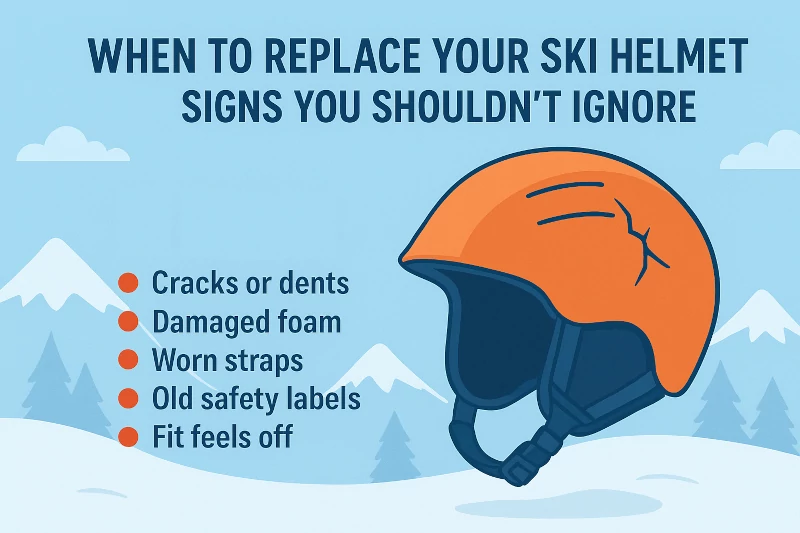
1. Visible Cracks or Dents on the Outer Shell
Even small cracks can compromise your helmet’s ability to absorb impact. The outer shell works to distribute the force of a blow, so any structural weakness means it won’t perform as intended.
2. Damaged Inner Foam or EPS Liner
EPS foam absorbs shock by permanently compressing during a hit, meaning it can’t regain its original structure afterward — meaning the helmet is no longer safe to use, even if the outer shell looks okay.
3. Worn or Loose Straps and Buckles
Your helmet must stay securely in place during a fall. Frayed straps or a loose buckle are not just inconveniences — they’re potential hazards. Replace your helmet if these components no longer function properly.
4. Outdated Safety Certifications
Modern helmets meet updated standards such as ASTM F2040 or EN 1077. If your helmet lacks these or carries an outdated certification, it’s likely time for an upgrade.
5. Unexplained Fit or Comfort Issues
If your helmet suddenly feels too loose, too tight, or uncomfortable, its structure may have changed over time. A proper fit is essential for both safety and comfort on the slopes.
How Impacts Affect Helmet Integrity
Single-Impact vs. Multi-Impact Ski Helmets
Most ski helmets are single-impact, meaning they’re designed to protect you during one major collision. After that, their ability to absorb further shocks diminishes significantly. Multi-impact helmets exist, but they’re usually for freestyle or skate-style use where minor crashes are more common, and the cost is higher.
The Hidden Damage After a Crash: What You Can’t See
A helmet can appear unscathed externally yet suffer internal microfractures invisible to the eye. After any fall or collision, even a light one, assume your helmet’s integrity may be affected. It’s safest to replace your helmet rather than use a potentially compromised one.
Environmental Factors That Shorten Helmet Life
UV Rays, Temperature Extremes, and Material Degradation
Prolonged exposure to UV light can make plastic shells brittle, while extreme cold or heat affects the foam’s elasticity. Storing your helmet in a damp or overly hot place (like a car trunk) can also speed up deterioration.
How Storage Conditions Impact Durability
Always store your helmet in a cool, dry location, ideally in a protective bag. Avoid leaving it near heaters, windows, or in sunlight. Proper care extends its usability and keeps you safer longer.
Upgrading to New Helmet Technology
What’s New in Modern Ski Helmets (MIPS, Hybrid Shells, etc.)
Today’s helmets are equipped with advanced safety systems like MIPS, which reduces rotational forces during angled impacts. Others use hybrid shell designs that combine durability with lighter materials. Upgrading ensures you benefit from the latest protection technology.
Benefits of Replacing an Old Helmet with a New One
Besides enhanced safety, new helmets often offer better ventilation, improved fit systems, and integrated audio compatibility — all making your ski experience more comfortable and enjoyable.
How to Properly Inspect Your Ski Helmet
Step-by-Step Helmet Inspection Checklist
- Check for cracks or soft spots on the shell.
- Examine the EPS liner for dents or compression.
- Test the chin strap and buckle for secure function.
- Ensure padding isn’t worn or detached.
- Look for signs of UV discoloration or warping.
When in Doubt: Getting a Professional Opinion
If you’re unsure about your helmet’s condition, visit a certified ski shop. Many retailers will inspect it for free (some charge a small fee) and can give expert advice on replacement options.
Cost vs. Safety: Why Replacing Your Helmet Is Worth It
A quality helmet may cost between $100 and $300, but it’s a small price compared to the potential problems and impact of a head injury to your life. Replacing your helmet on time is an investment in your safety and longevity on the slopes.
Frequently Asked Questions (FAQs)
1. How often should I replace my ski helmet?
Every 3 to 5 years, or immediately after a significant impact.
2. Can I still use my helmet after a minor fall?
No. Even minor impacts can damage the EPS liner, reducing protection. The exception is if you have a multi-impact helmet.
3. What’s the difference between ski and snowboard helmets?
Both provide similar protection, but ski helmets often emphasize aerodynamics, while snowboard helmets focus on ventilation and style.
4. How can I make my helmet last longer?
Store it in a cool, dry place, clean it gently, and avoid unnecessary exposure to sunlight.
5. Does an expensive helmet last longer than a cheap one?
Not necessarily — but higher-end helmets often use better materials that maintain safety longer.
6. What’s the best way to clean and store a ski helmet?
Use mild soap and water, air-dry it, and keep it in a protective bag away from heat and direct sunlight.
Conclusion: Stay Safe, Stay Smart on the Slopes
Knowing when to replace your ski helmet is crucial to protecting yourself on the mountain. Regular inspections, awareness of age and damage, and understanding safety standards all contribute to safer skiing. Remember — your helmet is your first line of defense, so don’t take chances with outdated or damaged gear. Stay proactive, stay informed, and enjoy every run with confidence.

by: Cory Willins
Cory is a dynamic and passionate content writer, specializing in sports-related topics. With over a decade of experience in the field, Cory has established… read more