How to Pack a Downhill Ski Bag for Flights

Flying with your skis can feel daunting — gear is heavy, awkward, and expensive to replace if damaged. But with a smart packing strategy, you can protect your skis and bindings, stay within airline rules, and reduce stress. In this blog, you’ll learn exactly how to pack a downhill ski bag for flights — from bag selection to internal organization to preflight checks.
Find out:
- What ski bags to use (soft, roller, double)
- How to position skis, boots, poles, and accessories securely
- Airline rules and best practices
- Tips to minimize damage and lost gear
1. Choose the Right Ski Bag
Before packing anything, make sure your ski bag is suited for air travel. Also see our post on the best downhill ski bags.
1.1 Soft vs. Hard vs. Roller Bags
- Soft ski bags are lightweight and flexible — easier to stash and lighter to handle, but less rigid protection.
- Roller / wheeled ski bags combine flexibility with easier airport navigation. Many travelers prefer a roller bag with backpack straps.
- Hard cases / tubes offer maximum protection but are heavier and more cumbersome, plus they can exceed airline size limits.
1.2 Size, Padding & Capacity
- Pick a bag that fits your skis length and allows space for padding and extras.
- Internally padded bags reduce impact.
- If you carry two pairs, a double ski bag gives space to pack accessories.
2. Know Airline Rules & Weight Limits
Packing smart is only half the battle — you must comply with airline baggage rules.
2.1 Bag vs. “Set” (Ski + Boot Bag)
Many airlines treat your ski bag and boot bag together as a single checked item.
Check your airline’s policy in advance.
2.2 Weight & Dimension Limits
- The combined weight of ski + boot bags often must stay under 50 lbs (≈ 23 kg) to avoid overweight fees.
- Airlines also impose linear dimension limits (length + width + height) for oversized gear.
- Overweight or oversized bags may be charged extra or treated separately.
2.3 What You Can & Can’t Pack
- Some airlines discourage stuffing non‑ski gear (clothes, souvenirs) too heavily into the ski bag.
- Boots are often safer as carry‑on or in a boot bag.
- Be aware that locks might be cut by security if they need to inspect your bag.
3. Step‑by‑Step Packing Strategy
Here’s a systematic method to load your downhill ski bag in a way that maximizes protection and organization.
3.1 Prep Your Gear
- Clean and dry your skis, bindings, and boots to minimize moisture and corrosion.
- Remove or secure loose parts (e.g. ski brakes) so they don’t flop or get damaged.
- Use ski straps or thick rubber bands to hold bindings flat — this reduces stress and “snagging” inside the bag.
3.2 Skis First — Positioning & Padding
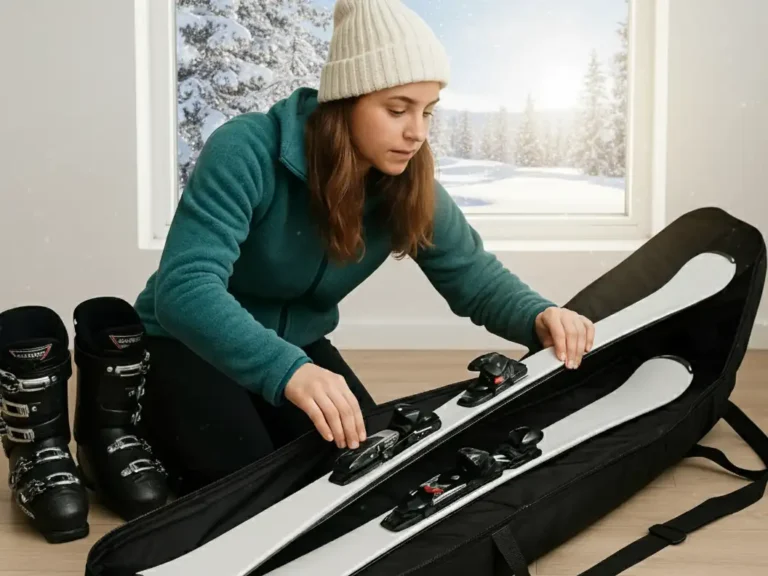
- Place your skis “base to base” (bases of skis facing each other) or “edge to edge,” depending on bag shape. Many travelers use base-to-base.
- Wrap the bindings and tips with padding, such as towels, old fleece, or soft clothing.
- Use socks or foam around the ski tips to protect from blunt impacts.
- Strap skis together securely to prevent shifting inside the bag.
3.3 Add Boots Wisely
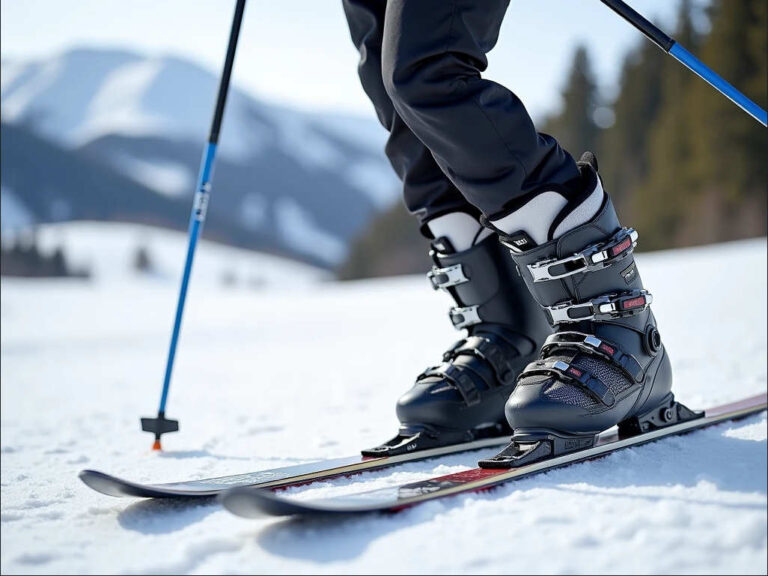
- Many skiers place boots on top of the ski tails, with padding in between to protect both surfaces.
- Stuff socks or small gear inside your boots to use the hollow space.
- If boots risk scratching your skis, place a jacket or soft cover between them.
3.4 Fill Gaps — Organize & Pad
- Use your soft clothing (jackets, pants, base layers) to fill empty spaces and act as buffer.
- Roll garments to reduce bulk and maximize “fill” efficiency.
- Use inner compartments or stuff sacks for goggles, gloves, buffs, etc.
- Place fragile items (helmets, lenses) in padded or protective wrap and position them away from edges.
3.5 Final Checks & Bag Closure
- Ensure nothing protrudes that might stress zippers.
- Run straps and compression belts tight but not over-constricting.
- Label your bag clearly (name, address, contact).
- If using a lock, use one approved by TSA (or leave unlocked, knowing security may open it).
4. Preboarding & Airport Tips
These tips help your ski equipment survive transport and avoid issues.
- Carry on boots, if possible — if your checked bag is delayed, at least you have your boots.
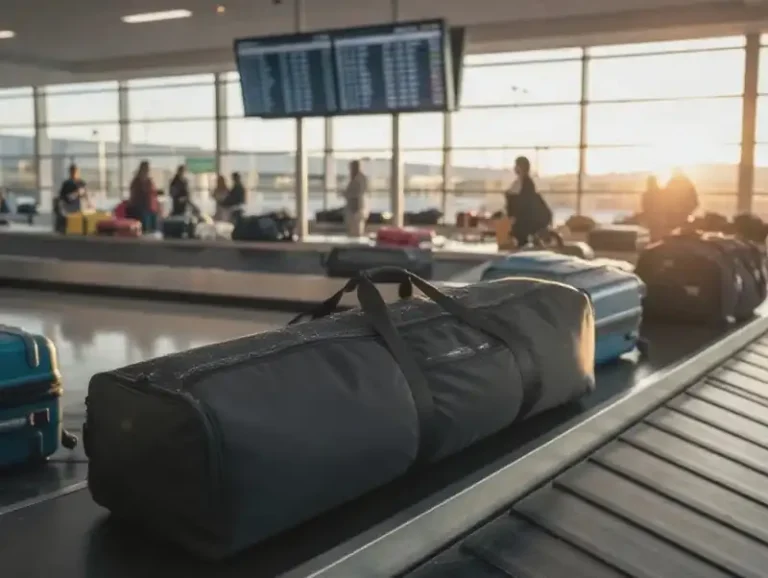
- Use an identifier or bright tag (e.g. colored ribbon) so your ski bag stands out on the baggage carousel.
- Consider placing a tracker (AirTag / GPS tracker) inside the bag to monitor it.
- In case your bag is mishandled, take photos of your packed bag and gear before checking in (for any possible damage claims).
- At baggage drop, inform agents that your bag contains skis and padding — sometimes they treat ski bags mildly.
5. Arrival, Unpacking & Return Flight Prep
- Unpack your skis first and inspect for damage.
- Clean off snow or debris before flying home.
- Dry any wet layers before packing them back in, to prevent moisture damage.
- Use the same careful padding strategy on the return leg.
FAQ
Q: How do I pack a downhill ski bag for a plane?
A: Start with skis first (bases or edges together), use padding around bindings and tips, place boots on top, fill gaps with soft gear, compress and strap down, then close with care.
Q: Can I check my ski bag and boot bag together?
A: Many airlines allow one checked item for skis and one for boots without extra cost. Always check the airline’s baggage policy first.
Q: What’s the weight limit for a ski bag on flights?
A: Most airlines cap checked baggage at around 23 kg / 50 lbs. Stay under this to avoid overweight fees.
Q: How can I protect ski tips and bindings during air travel?
A: Wrap the tips in foam or socks, use padding around bindings, and strap skis together to minimize shifting.
Q: Should I carry on my ski boots?
A: Yes, if possible. Boots are harder to replace or rent. Even if checked, separate them from skis or pad them well.
Packing a downhill ski bag for air travel doesn’t have to be a nerve-wracking experience. With the right bag, methodical gear placement, smart padding, and awareness of airline rules, you can protect your skis, avoid extra fees, and arrive ready to hit the slopes. Safe travels and happy turns!

by: Ray Pember
Ray is an experienced wordsmith who has dived deep into various niches. With over two decades under his belt, he knows a thing or two about staying afloat in this ever-evolving digital world… read more