Best Materials for Waterproof Ski Gloves – Leather vs Synthetic
Understanding the Best Material for Waterproof Ski Gloves
When you’re out skiing, keeping your hands warm and dry isn’t optional—it’s essential for safety and comfort. Choosing the best material for waterproof ski gloves helps ensure long days on the mountain stay enjoyable instead of turning into a battle against cold fingers and wet gear.
Ski gloves might look similar at first glance, but the materials used in the outer shell significantly affect waterproofing, durability, and overall performance. Most ski gloves are made using either leather or synthetic fabrics, and each option offers strengths depending on your environment.
Why Waterproofing Matters on the Slopes
If you’ve ever had your gloves soak through mid-run, you already know why waterproofing matters. Wet gloves quickly lose their insulating properties, and once your hands become cold, even a heated lodge break won’t fully warm them up again.
Waterproof gloves help by:
- Keeping melting snow from soaking the insulation
- Maintaining dexterity for tightening boots or adjusting poles
- Reducing wind chill on exposed chairlift rides
- Protecting your hands from icy surfaces and wet equipment
From skiing in both dry Colorado powder and Pacific Northwest slush, the difference between waterproof and non-waterproof gloves becomes obvious within minutes—especially during wet spring conditions.
Key Features of High-Quality Ski Glove Materials
When evaluating glove materials, consider these key factors:
- Moisture protection – How well the shell and membrane block water
- Breathability – Whether sweat escapes without trapping moisture inside
- Durability – Especially important if you ski on trees, ice, or rocky slopes
- Warmth retention – Compatibility with insulation and liners
- Comfort and flexibility – How easily you can grip poles or adjust straps
These features work together to determine overall performance—not just the shell material alone.
Leather Ski Gloves Explained

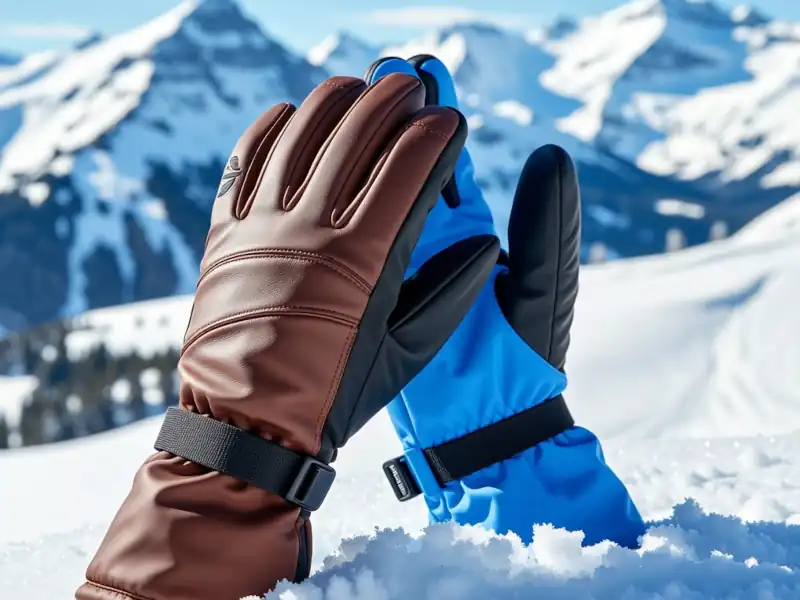
Leather remains a favorite among advanced skiers because of its natural toughness and long-term comfort. It’s the same reason mountaineers and backcountry guides rely on it: it holds up season after season.
Types of Leather Used in Ski Gloves
Common leather types include:
- Goatskin – Highly flexible, great for gripping poles
- Cowhide – Extremely tough and abrasion resistant
- Deerskin – Soft, flexible, and comfortable for all-day wear
- Pigskin – Budget-friendly and durable
Many glove manufacturers, including Hestra, prefer goatskin because it balances softness and strength exceptionally well.
Strengths of Leather in Cold Conditions
Leather shines in dry, cold environments. According to REI’s glove-selection guide, leather offers outstanding grip and naturally resists wind — key advantages in alpine conditions.
Additional strengths include:
- Long-lasting durability
- Comfortable break-in over time
- Strong resistance to cuts and abrasion
- Excellent pairing with wool or synthetic liners
Leather becomes more comfortable the more you use it, almost like a custom-molded fit.
Weaknesses of Leather Gloves for Waterproofing
Leather is not naturally waterproof. Leather requires:
- Regular application of waterproofing balm or wax
- Occasional conditioning to prevent drying or cracking
Leather can perform well in snow, but in slushy conditions, it usually needs more maintenance.
Synthetic Ski Gloves Explained

Synthetic gloves dominate modern ski gear because they’re engineered specifically for wet environments. Brands often combine nylon or polyester shells with waterproof membranes for superior moisture protection.
Most Popular Synthetic Materials
You will commonly find:
- Nylon – Lightweight and tough
- Polyester – Flexible and cost-effective
- TPU or polyurethane coatings – Extra water resistance
- Waterproof membranes like GORE-TEX®, Hipora®, or Omni-Tech®
According to the GORE-TEX technology overview, their membrane structure allows sweat vapor to escape while blocking liquid water—an ideal combination for skiing.
Advantages of Synthetic Gloves in Wet Conditions
Synthetic gloves offer several benefits:
- Exceptional waterproofing
- Faster drying time than leather
- Less required maintenance
- More price options for beginners
- Lightweight feel even in wet snow
Synthetic gloves consistently stay drier longer than leather.
Limitations of Synthetic Materials
Synthetic gloves have a few drawbacks:
- They typically wear down sooner than leather
- Seams or fingertips may fray over time
- They don’t develop a customized fit the way leather does
Still, for consistently wet environments, synthetics clearly outperform.
Leather vs Synthetic — Comparing the Best Material for Waterproof Ski Gloves
Waterproofing Performance
- Leather: Good with proper treatment; not the best in slushy snow
- Synthetic: Excellent, thanks to built-in membranes
Breathability and Comfort
Leather breathes naturally, but high-end membranes in synthetic gloves offer some decent airflow.
Durability and Longevity
Leather wins long-term durability; synthetics excel in low-maintenance waterproofing.
Price Comparison
Leather gloves cost more because of craftsmanship and material quality. Synthetic gloves offer great performance for the price.
Maintenance Requirements
Leather requires conditioning; synthetic gloves require almost no upkeep.
Choosing the Right Glove Material for Your Activity Level
Cold, Dry Climates
Leather excels here due to its natural insulation synergy and wind resistance.
Wet, Slushy Snow Conditions
Synthetic gloves dominate in rain, heavy snow, and spring skiing thanks to waterproof membranes and quick-drying shells.
Extra Features That Improve Ski Glove Waterproofing
Key additions to look for:
- Waterproof membranes (GORE-TEX, Hipora)
- Taped or sealed seams
- Long cuffs with adjustable closures
- DWR (Durable Water Repellent) coatings
- Removable or moisture-wicking liners
These features enhance the chosen material’s performance substantially.
FAQs About the Best Material for Waterproof Ski Gloves
1. What is the best material for waterproof ski gloves overall?
Synthetic materials, especially when paired with waterproof membranes, provide the best overall waterproofing. Leather can also perform well but requires regular treatment.
2. Are leather ski gloves waterproof?
Not naturally. Leather must be treated with waterproof wax or conditioner to repel moisture effectively.
3. Do synthetic gloves last as long as leather gloves?
Generally, no. Leather is more durable and can last for many years, while synthetic gloves may wear out sooner depending on usage.
4. Which gloves are warmer—leather or synthetic?
Both can be warm, but leather often offers better insulation compatibility and wind resistance, making it ideal for cold, dry days.
5. Are waterproof membranes really necessary?
Yes. Membranes significantly boost waterproof performance, especially in wet or slushy conditions.
6. What should beginners choose: leather or synthetic?
Most beginners benefit from synthetic gloves because they are affordable, low-maintenance, and highly waterproof.
7. Can I use ski gloves for snowboarding?
Absolutely. The same waterproofing and insulation features apply, though snowboarders may prefer gloves with reinforced palms.
The Bottom Line________
Choosing the best material for waterproof ski gloves depends on your climate and skiing style. Leather thrives in cold, dry conditions and offers unmatched durability, while synthetic gloves provide superior waterproofing and lower maintenance in wet conditions. Both are excellent choices when paired with the right features and care routine.

by: T. Belleau
Health and sports are at the heart of Trisha’s writing passion. An avid cyclist, mountain biker, and e-biker, she brings firsthand experience and genuine excitement to her sports-related articles. Trisha’s love for the outdoors extends… read more